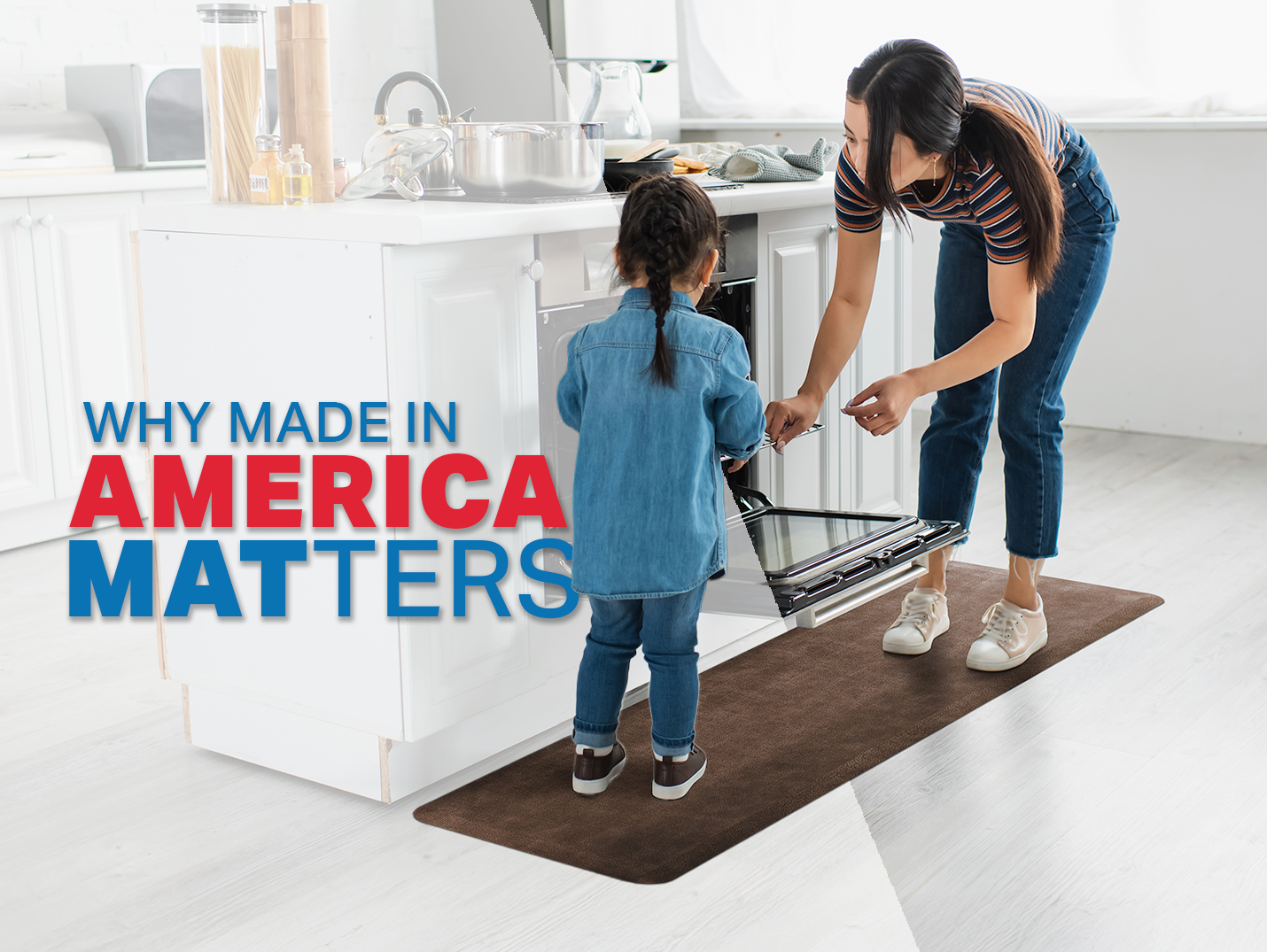
The Only Kitchen Mat That Passed Every Test
America's Test Kitchen put every major anti-fatigue mat through the same gauntlet. One came out on top.
America's Test Kitchen built their reputation on one thing: rigorous, no-nonsense testing. No brand relationships. No sponsored content. Just a team of professional cooks putting products through the exact conditions home cooks actually face — and reporting honestly on what survives.
When they tested the anti-fatigue mat category from top to bottom, one mat came out on top: the WellnessMat. Described as "supportively firm yet plush," it was the only mat that checked every box their team cared about — and the competition fell short in ways that matter.
Here's exactly what they found.
America's Test Kitchen · Official Verdict
Winner: WellnessMat
"Supportively firm yet plush, providing a solid, comfortable surface for long days in the kitchen. It's durable and easy to clean, and its beveled edges and effective no-slip backing minimize the risk of tripping or slipping."
The Science
Why the Mat Under Your Feet Matters More Than You Think
ATK didn't just test mats — they explained why they matter. According to Dr. Griffin Baum, a neurosurgeon and spine expert at Lenox Hill Hospital, anti-fatigue mats reduce the negative impacts on joints and the spinal column caused by prolonged standing. More than cushioning, the right mat encourages muscles in the legs and feet to make constant microadjustments — stimulating blood flow, preventing pooling in the lower body, and reducing the risk of leg swelling, cramps, and blood clots.
In other words, the mat under your feet during a long cook isn't a comfort accessory — it's doing real ergonomic work. Which makes the difference between a mat that performs and one that merely looks the part all the more important.
The Testing Criteria
What a Pro Kitchen Testing Team Actually Cares About
ATK evaluated every mat across five factors. The WellnessMat excelled on all of them. The competition? Not so much.
Criterion 01 · Foam density & thickness
Firm enough to support, soft enough to comfort
All mats claimed ¾" thickness — actual measurements varied by up to 0.20 inches. ATK preferred mats around 0.70" that used firm, solid foam. Softer mats "bottomed out," compressing until testers could feel the hard floor below. The WellnessMat's Advanced Polyurethane construction held its shape under sustained pressure without sacrificing comfort.
Criterion 02 · Flexibility
Lies flat, absorbs weight, never buckles
Rigid mats crumpled or curled at the edges under pressure, creating tripping hazards instead of preventing them. The best mats were flexible enough to absorb weight across the whole surface while staying flush with the floor — exactly what the WellnessMat's single-piece polyurethane construction delivers.
Criterion 03 · Beveled edges
A gentle slope, not a cliff edge
Not all beveled edges work the same. ATK preferred edges that tapered at a shallow angle — "more like a gently sloping beach than a steep oceanside cliff" — keeping the mat low-profile and preventing stumbles. Steeper edges on competing mats remained genuine trip hazards despite the marketing claims.
Criterion 04 · No-slip backing
Weight is the difference — and the WellnessMat has it
Every mat claimed no-slip performance. Most didn't deliver. ATK found no correlation between backing texture and actual grip — the real factor was weight. At just over 6 pounds, the WellnessMat weighed nearly twice as much as its closest competitor, giving it the floor-gripping authority that lighter mats simply can't fake.
Criterion 05 · Surface & cleanability
Smooth, non-sticky, and easy to sweep clean
Textured mats trapped flour, crumbs, and pet hair in their ridges — and became sticky when wet. ATK preferred smooth surfaces that swept clean easily and didn't collect debris. The WellnessMat's non-porous polyurethane surface repels spills rather than absorbing them, and wipes clean without residue.
The Test Results
Where the Competition Failed
ATK was direct about what disqualified the other mats. These weren't minor quibbles — they were failures on the exact criteria that determine whether a mat is safe and effective to use.
Failure · Bottoming Out
Thin, soft foam that compressed until testers felt the floor
"Thinner and softer foams provided less support and were more likely to compress and bottom out, causing us to feel the floor below the mat." — America's Test Kitchen
Failure · Curling Edges
Stiff construction that buckled and curled — creating tripping hazards
"The edges of stiffer mats crumpled or curled up slightly at the edges as we applied pressure. The mats were less likely to lie flat and were often tripping hazards." — America's Test Kitchen
Failure · Sticky Surfaces
Textured surfaces that trapped debris and became sticky when wet
"Mats with sticky surfaces collected crumbs and other debris and were harder to clean. Similarly, mats with raised ridges or other textures trapped flour and pet hair." — America's Test Kitchen
Failure · Sliding on the Floor
No-slip claims that didn't hold up — one mat slid while being walked across
"Some mats didn't hold up to their no-slip promises because they were too lightweight or their antislip backing material wasn't effective (or both). They moved around as we used them, and one even slid as we walked across it, which was dangerous." — America's Test Kitchen
"At just over 6 pounds, it weighed nearly twice as much as the next heaviest competitor."
— America's Test Kitchen
Why It Wins
Built to Pass Every Test — Including the Ones That Matter Most
The WellnessMat's construction answers every failure mode ATK identified in the competition. A single-piece Advanced Polyurethane core doesn't bottom out, buckle, or peel. Its non-porous surface repels spills rather than absorbing them. Its substantial weight keeps it grounded without a single clip, anchor, or mat pad. And its beveled edges taper gradually — flush to the floor, never a stumble risk.
These aren't marketing claims. They're the same attributes that earned a top rating from a team of professional cooks who get paid to find the weaknesses everyone else misses.
And they're backed by a 20-year manufacturer's warranty — because a mat that can outlast the competition's test can outlast decades of kitchen use.
All quotes sourced directly from America's Test Kitchen's anti-fatigue mat review. WellnessMats (sold at Williams Sonoma) was named the overall winner. ATK content is behind a paywall at americastestkitchen.com.
More WellnessMat(ters)
Back to School Is a Whole-House Event

What Do You Get a Couple Who Already Lives Together?